
Each day a million thoughts run through your head. You see and hear lots of good things to try. Your goals are many and varied. But, how to do it?!?
We have discussed multiple strategies on this blog that help answer that question, and today we will add one more aspect.
Routines are effective. The more habits you can create in your day and then string together into a routine, the more you will accomplish without thinking about it. Yes, it takes time to build those habits, but the investment pays off immensely in the future.
When you think about eating an elephant one bite at a time, habits are a great illustration of “one bite” a day. If you do one thing every day (or every weekday), how much would be accomplished in a month? Or a year? If you want to do something more (like exercise or read), doing that thing 10 minutes a day will add up. After a few months, you will indeed have done something more.
Habits provide rest. When you get to the point that you have a habit (like brushing your teeth), you don’t have to think about what you are doing while you are doing it. Some days that is a micro-nap for your brain; other days it is free space for creative or deep thinking. Make the most of it!
Also, we are not designed to go full-out all day long. Scattering mental breaks throughout your day gives you a chance to catch your breath — while still accomplishing what you continually need in hygiene or chores or growth — before expending energy on the major efforts of the day.
Structure builds security. When you know the road you’re on, you are comfortable lifting your foot to take a step. In complete darkness in an unfamiliar room — not so much. When your routine is established, making exceptions is safer. When you know what to expect, you will naturally feel less anxious. You can be confident you will come back to the “normal” day. Bases are covered, so a special activity is not a concern. If you have put wise effort into big picture planning ahead of time, you can relax and enjoy the small trip.
____________________
Not only do these points all apply to us, they also help with children. A regular, daily routine will:
- minimize repeated instruction (they know what they are doing; they do it every day), and
- require less energy in creating and communicating a new schedule for every hour and every activity.
- Children love the security of structure. Once it is established, they will be active advocates for keeping it in place and you on track!
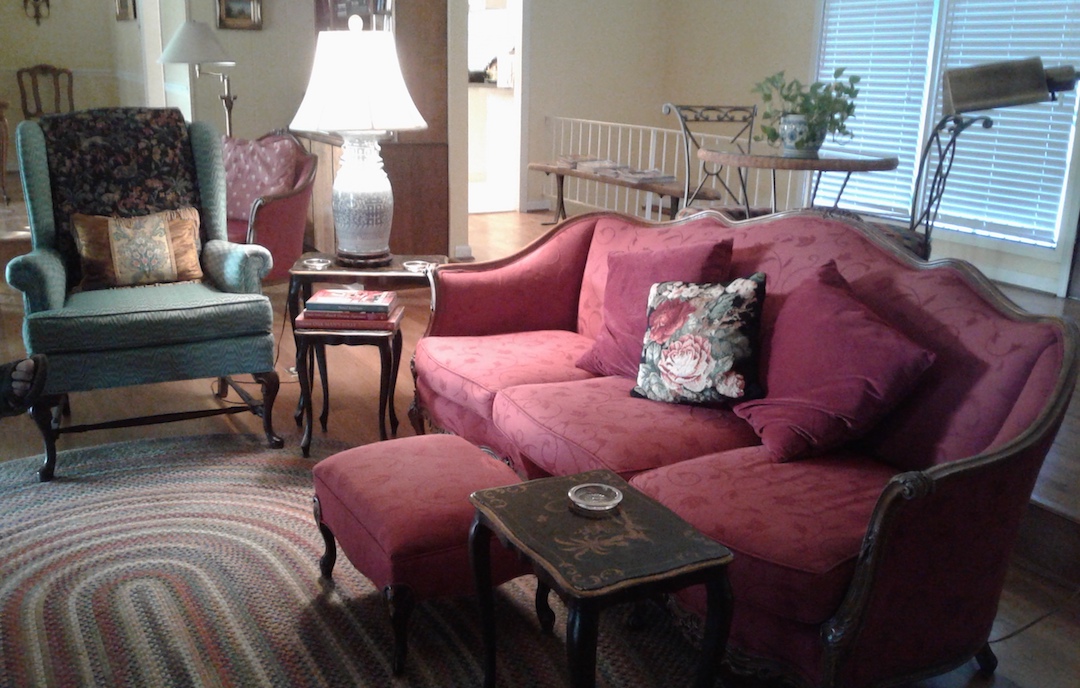
 Link styles with color to coordinate for a cohesive look. Repeating one or more color combinations in the rooms creates the look of greater space. A range of furniture styles, sizes and shapes can have a coordinated look with repeated or corresponding colors. You create unity in your existing collection of furniture by grouping pieces by wood tones or by upholstery color.
 Experiment with color. Your base colors for a house don’t have to be neutrals. You can use cranberry rather than tan on your wall, as long as you have a cohesive color palette throughout. Consider how colors make you feel when choosing your palette, as well as which colors make you look good. Your home is your daily background.