Rejoicing in Relationships

Recently I was part of a reading group discussion on Unforgettable by Scott Simon, and part of the conversation was about how the author told the story of his life with his mother through relationships. The people they knew made their life what it was. Memories of family and friends, long-term and short-term, painted the picture of the decades they shared. Whether life-time family members or friends known for a time, so many made an impact.

So often we think of lives — whether ours or anyone else’s — as a series of events. We are born, we walk, we start school, we graduate, we work, we marry, etc. Project-driven types like me tend to think of our days as a series of tasks; Monday is defined by the to-do list.

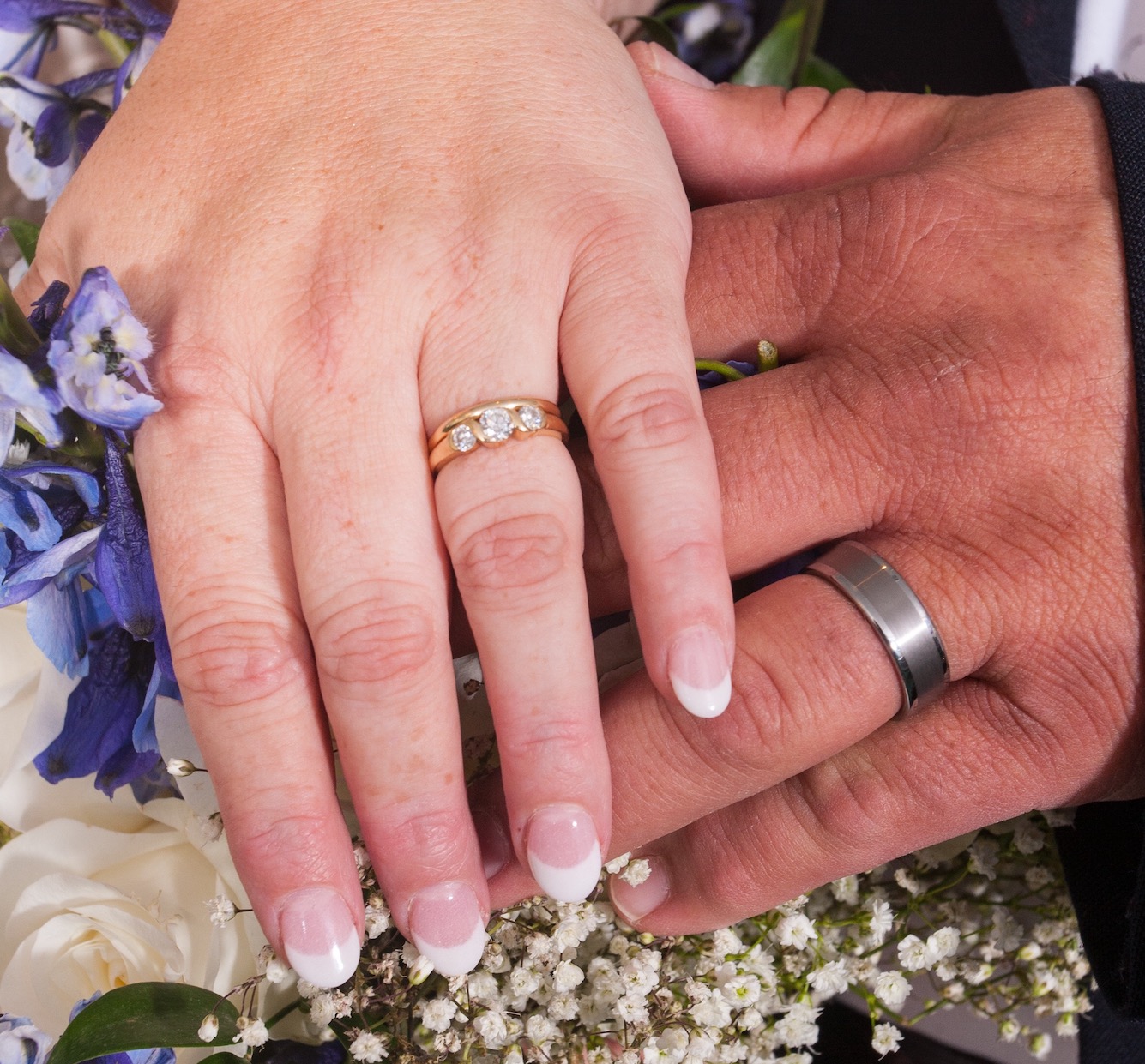
Speaking for myself, I need the reminder daily (if not hourly) that my life is in relationships, not accomplishments or milestones. My relationship with God is life, all I need today and for eternity. My relationship with my husband is my earthly priority and a priceless work of God’s grace in my life. My relationship with my stepdaughter is a precious treasure day after day. My relationships in my local church and through the work day build me up and provide an avenue for blessing in turn. My friendships provide similar benefits and a whole lot of joy. Neighbors, extended family, acquaintances, waiters and clerks we see on a regular basis, and more — all enrich daily life.

I need to remember that my life so far is a beautiful tapestry of people God has placed in my path. I need to remember that my day today is not about getting the oil changed and the laundry caught up and the project finished and dinner made, but about loving those in it. Yes, I love them by doing the dishes, but often I need to look up from the sink and smile at my family and be thankful.
Organized Shelves

May I introduce you to my home? It contains a lot of stuff. A LOT. OF STUFF. I suspect I am not the only one. If you choose not to be minimalist (or minimalist in spirit but not practice), you end up having to find a place for all that stuff. Once your closets are full (oh, yes!), or if you don’t have many closets (I know your pain), we often end up looking at cabinets or shelves for the rest. And that is a good option for items we use often, like shelf-stable food or cookie sheets or toiletries. But the option will fail if it’s not sufficiently organized.

It helps to be able to find what you need AND minimize visual clutter in the process. Shelving is great because it is easy to access. It can be a problem, though, if it’s just more layers of unknown piles stacking to the ceiling. If what you need is buried, you can’t get it and you are oppressing your brain in the process!

Sort. Sort. Sort. Put like items together. Make it easy to see where things are in a split-second glance. Consider also which items are often used together. Mixing bowls can be in the section next to the brownie mix. Plastic food storage containers can be in the section next to the plastic bags for post-dinner clean-up.

Do your best to fit the items to the shelf size. Big shelf, big stuff. Push the little things to the smaller shelves. The less you have stacked, the easier it is to put your hand on it when needed. This also goes for bookshelves. Keep the big, tall books on the taller shelves and the short paperbacks on the more narrow shelves. It will fill the space better and look neat.

Put what you use most where it is easiest to reach. The heavier, less frequently used stuff can go on the very bottom shelf. The lighter items can go on the top shelf. You will see and reach for the middle shelves the most, so save yourself a few inches.

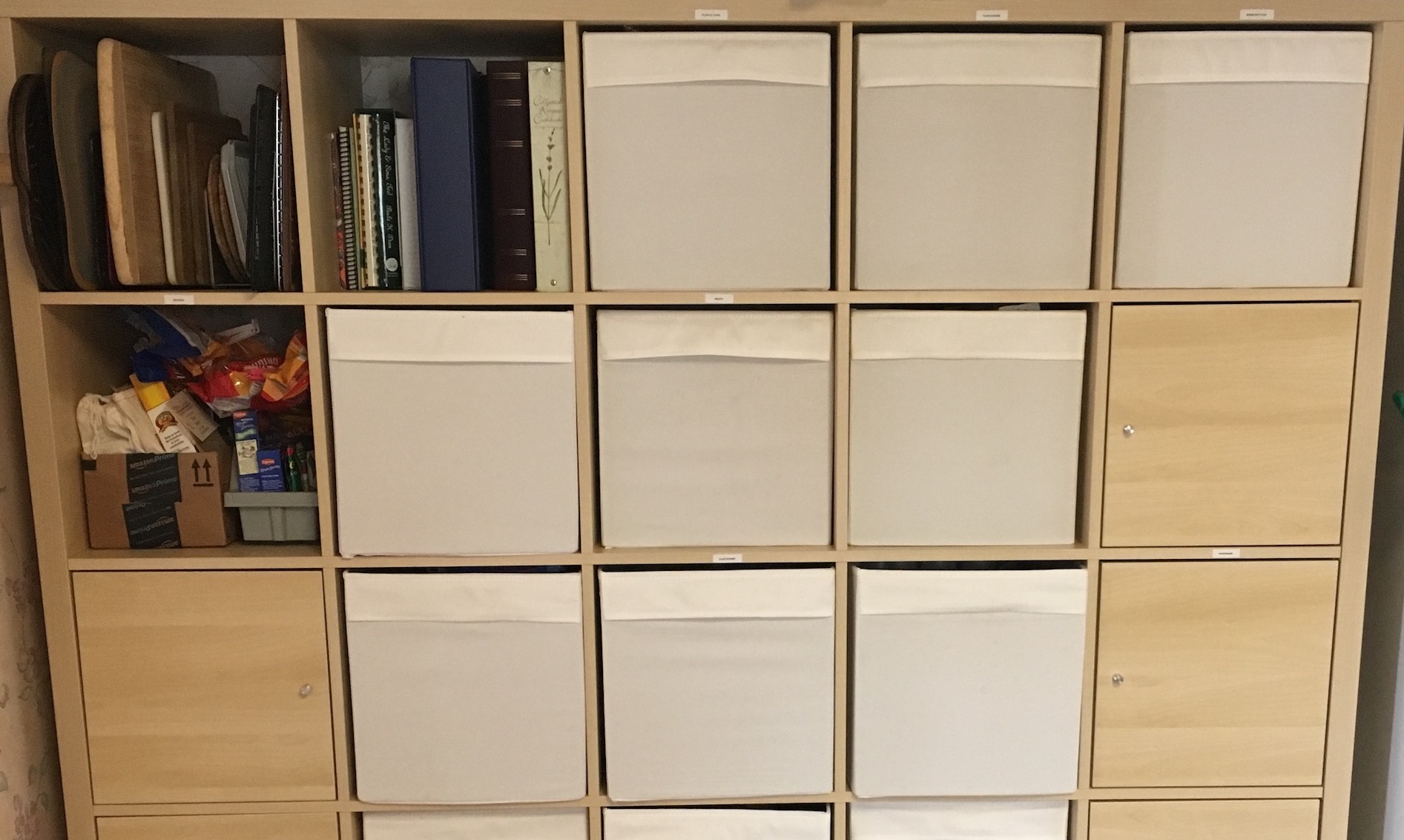
IMG_4225Hide what you can in plain sight. We’ve already discussed closets, but this is also for shelving out in a room. Using baskets or bins or banker’s boxes covered in contact paper will help cut down on the clutter in the room. It is there, but you don’t have to look at it until you need it. Using a neutral color for the bins or paper cover will make the shapes blend into the background. Or you can take the opportunity to add a pop of color to the room.

Mix up your shelving. You can use the same set of shelves for books, a few boxes, a vase with flowers, a few picture frames, and toy storage. Bonus: it looks decorative, just like in catalogs! This will also help relieve some of the pressure to fill the shelf with whatever you had earmarked for it. Keep what you need and is meaningful. If you only need enough books, toys and pictures to fill one shelving unit — excellent. If it eventually expands to two, no problem, but resist the urge to force the expansion just to fill space. Note: you will still need to sort into separate areas. For instance, one shelf is books, one shelf is half books and half pictures, and the bottom shelf is toys.