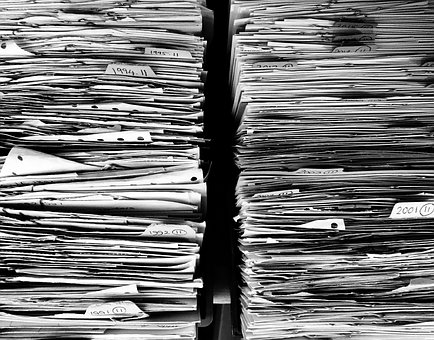
Thank you so much to all who submitted feedback forms recently! That was immensely helpful, and I appreciate it.
One note from the feedback survey this year requested more discussion on organizing papers. This caught my eyes for two reasons: 1) we really haven’t discussed that at all, and 2) I avoid paper like the plague (perhaps causing number 1). So let’s dig in to that topic today!
Do you need to keep it? We don’t always. We think we should, but do we really? That’s the first question to ask, because a No will save a lot of time and effort.
Does it need to be paper? Could it be scanned and kept that way? Tim Challies has written well on using Evernote to organize files electronically. We have the tools available, and they do save a lot of physical space and time searching.
How will it be referenced? Whether it’s paper or electronic, this matters. If you think one way, don’t organize your files another way that you will fight every single time. If you aren’t the only one using it, others will need to be taken into account too. But choose a system that makes sense.
Personal documents can be kept by area (house, church, cars, taxes, projects, finances, legal, etc.) or by person or by purpose (financial record, reference as needed, sentimental value). Once you have big categories, some may be so big you need to divide more.
How will you know what it is? Labelling is key. How you will refer to it when you need it again should show up in how you label or name your file or box. If you call a file Bovines but always call the animals Cows, you will search for Cows when you need those records! If you need to keep brown cows and spotted cows records separate, include those words in your label also.
Note: Going too far into the weeds with a filing structure can hurt you. If you only need receipts by year for a total cost, don’t take time to alphabetize them by store name.
Do you still need to keep it? Especially if you use paper files, annual or at least biannual review is necessary. You may have needed it 5 years ago, but you do not need it any longer. In that case, clean it out. Your system will work better for being unclogged.