
Sometimes the days get away from us. Sometimes we take a few minutes at the start to think about what we need to do. In those few minutes, it is good to think about whether we have covered all the bases.
Generally speaking, we all have three sets of stuff to do. These need to be addressed for our time to be used well. That can be tricky! But if all three are reflected in the daily or weekly plan, it’s off to a good start.
Scheduled Commitments
The dentist. The practices. The work. The school days. These are things that are commitments at certain times on specific days. You don’t just stop into the dentist’s office when you are driving by; it’s a date and time. If you can’t make it as planned, you re-schedule, but it continues to be a specific date and time.
- Work schedule
- School schedule
- Medical appointments
- Sports schedule
These are the things that should — and often do — go on the calendar first. They are the non-negotiables. It’s not that you can’t reschedule, but for the moment they are fixed. You have to work around these entries.
Priorities
What are your priorities? We all have them. Some are assigned to us, and some we take on ourselves. Either way, if they are truly priorities, they will show up in our use of time. So as we manage our time, we block out space on our calendars to focus on what is most important. If we don’t, these are the things that tend to continually be put off for another day, and that is a dangerous trap.
- Do you have regular time for devotions?
- Do you have time marked to just enjoy your friends or children or family?
- Do you set aside 20 minutes to read on a regular basis?
Tasks
The long to-do list. So much to do, but have you scheduled time to do it all? If your day is full of commitments and focused priorities, without a minute to breathe, those tasks will not get done. Tasks are the little things: errands, dishes, laundry, bank, birthday cards, etc. They do also reflect priorities, but they are the 5-to-15-minute items.
There is no need to schedule time for each task on our calendars, but it can be helpful to schedule an hour or two a day (whatever time fits each the current need) to knock out tasks.
- Run errands (dry cleaning, bank, pharmacy)
- Housework (hall closet, bathrooms, vacuum)
- Bills and correspondence
That way, time is there to address them, and you can tackle the list effectively during that time without distraction.
If all three types of activities show up on the radar, we know priorities aren’t lost in tasks or appointments won’t overrun laundry. It’s a great first step in managing time and tasks!
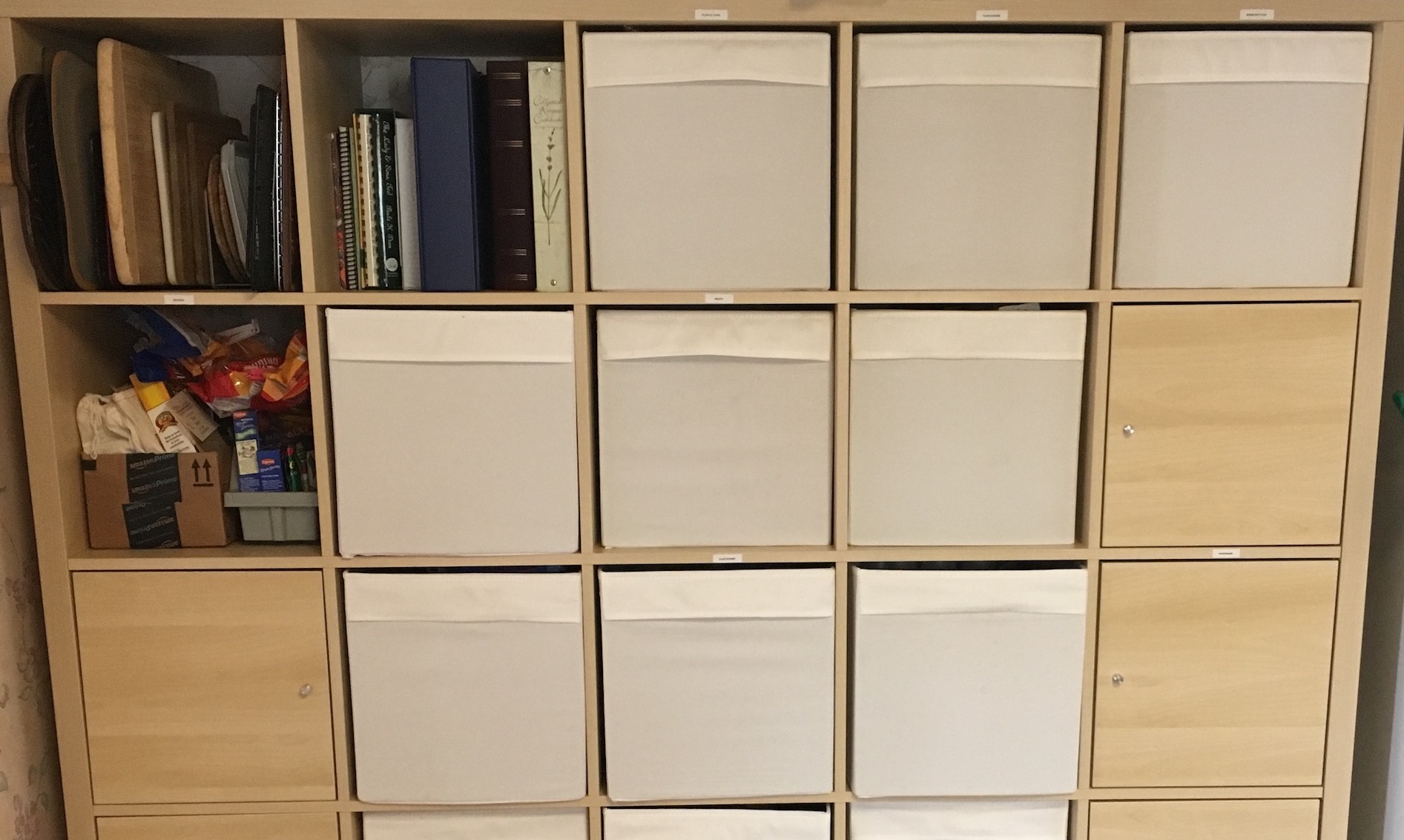
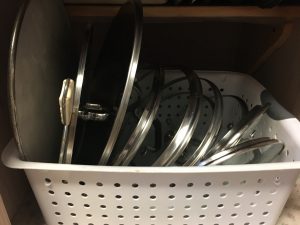 Sort. Sort. Sort. Put like items together. Make it easy to see where things are in a split-second glance. Which items are often used together? Plastic food storage containers can be in the section next to the plastic bags for post-dinner clean-up.
 Hide in plain sight. Just as in